
Home » Types of Magnets » Rubber Magnets
Rubber Magnets
| Features | Applications | Graphical Representation |
| Properties |
Anisotropic flexible rubber magnets are made by mixing ferrite magnet powder with synthetic rubber or plastic. When barium or strontium ferrite powder are consolidated with polymer matrix, anisotropic flexible rubber magnets are produced. The magnets so produced, have an excellent flexibility in permanent magnetic material field. These magnets because of their flexible feature can be easily molded and cut into stripes without affecting their magnetic properties. They also have an excellent machining characteristics.
Features
- The magnetic properties of the flexible rubber magnets are higher than that of sintered isotropic ferrite magnets.
- It is easy to give desired shapes to the magnetic rubber as the punching, cutting, perforating and bending are easy and simple.
- The density is lower than that of sintered ferrite magnets.
- The flexibility of the magnets prevents it from cracking or breakage.
- They have good resistance to demagnetization.
- Average temperature stability.
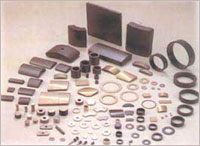 The different applications of flexible rubber magnets are :
- Advertising
- Motors
- Sensors
- Learning material
- Decoration magnets for refrigerator
- Magnets for toys
- Vehicle signage
- Shelf and bin marking
- Craft, hobby, and toys
- POP displays
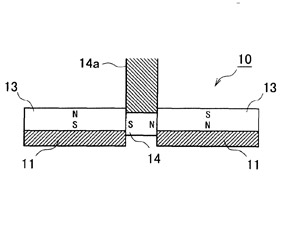
Properties
| Physical Properties | |
| Density | 3.6 ~ 3.8 g/cm3 |
| Hardness | 92 ~ 97 Hs (A) |
| Tensile strength | 58 ~ 78 kg/cm2 |
| Elongation | 125 ~ 165 % |
| Field Strength | 10kOe 800kA/m |
| Temperature range | -40 ~ +80°C |
| Flexibility | Good |