
- Overband Magnetic Separators
- Suspended Plate Magnets
- Magnetic Drum Separators
- Plate Magnets
- Drawer Magnets
- Roller Type Magnetic Separators
- Gravity Feed Magnets
- Grinder Plate Magnets
- Hump Magnet
- Lifting Magnets
- Liquid Line Magnets
- Magnetic Coolant Separators
- Center Flow Magnets
- Magnetic Liquid Traps
- Cartridge Magnetss
- Cross Belt Separators
- Pneumatic In Line Magnets
- Grate Magnets
- Drum Magnets
- Tube Magnets
- Wet Drum Separators
Home » Magnetic
Separators » Pneumatic In Line magnets
Pneumatic In Line magnets
| Features | Working | Applications | Design |
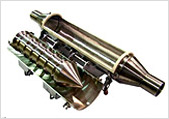 In line magnets are those separators which swings away from the housing for quick external cleaning. The in line magnets are meant to maintain the unobstructed flow of the materials. The entire cross section of the product flow is monitored by the strong magnetic field. The most popular type of in line magnetic separator is pneumatic in line magnets which
are built for use in dilute phase pneumatic conveying systems.
In line magnets are those separators which swings away from the housing for quick external cleaning. The in line magnets are meant to maintain the unobstructed flow of the materials. The entire cross section of the product flow is monitored by the strong magnetic field. The most popular type of in line magnetic separator is pneumatic in line magnets which
are built for use in dilute phase pneumatic conveying systems. Features
- Inexpensive, fast and easy to clean.
- Pneumatic magnets uses either ceramic or powerful rare earth magnets.
- Normally the structure is constructed out of partial or full stainless steel.
- They can be installed directly into the pneumatic lines for trapping the ferrous contaminants.
- There is an additional feature of swinging of magnets which helps in the easy cleaning.
- The in line pneumatic magnets trap tramp metal before it reaches your vital equipment.
Pneumatic in line magnets are designed in such a way so that it can be easily installed in an existing conveying line. It does not hamper the velocity and maintains a continuous flow. The nose cone diverts the product stream over the stainless steel sleeve assembly. The product stream is ribbed at the magnetic pole areas to maximize tramp metal retention as the product flows over and around the sleeve. Later the magnet is cleaned either manually or automatically depending on the type of pneumatic line magnets.
Application
Pneumatic line magnets are used in dilute phase pneumatic processing systems. These magnetic separators remove inbound tramp metal contaminants from product streams conveyed by air in both horizontal and vertical processing and transfer lines. Some of the popular applications of pneumatic line magnets are:
- Powder or granular food products
- Pharmaceuticals
- Plastics
- Chemicals
- The pneumatic inline magnets consist of magnetic elements that aid in quick and easy cleaning.
- The magnets used are either ceramic magnets or rare earth magnets.
- Design is enclosed in stainless steel.
- Product leakage is prevented closed cell food grade gasket.