
- Overband Magnetic Separators
- Suspended Plate Magnets
- Magnetic Drum Separators
- Plate Magnets
- Drawer Magnets
- Roller Type Magnetic Separators
- Gravity Feed Magnets
- Grinder Plate Magnets
- Hump Magnet
- Lifting Magnets
- Liquid Line Magnets
- Magnetic Coolant Separators
- Center Flow Magnets
- Magnetic Liquid Traps
- Cartridge Magnetss
- Cross Belt Separators
- Pneumatic In Line Magnets
- Grate Magnets
- Drum Magnets
- Tube Magnets
- Wet Drum Separators
Home » Related Articles » Neodymium In ydrogen Atmosphere
Neodymium In Hydrogen Atmosphere
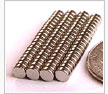 Neodymium In Hydrogen Atmosphere Neodymium iron boron(NdFeB) do not perform well in the atmosphere dominated by hydrogen. It is advised to use Neodymium magnets (NdFeB )where the atmosphere has been purged with Hydrogen for many reasons, such as purity. If NdFeB magnet is used in such atmosphere special care needs to be taken.
 There are two mechanisms that cause failure due to hydrogenation of the NdFeB magnet. A Neodymium Iron Boron magnet has two phases in which the Nd2Fe14B phase is the predominant phase. This is the basic molecular lattice structure of the magnet. The penetration of hydrogen molecule in the basic molecular structure causes a mechanical stress inside the molecule. The expansion of molecules results in internal breakage.
Secondly the hydrogen is absorbed by the neodymium- rich phase at the boundary. The combination of hydrogen and neodymium results in the powdery materials. This leads to the failure of the process and visually appears as if the magnet is simply crumbling away.
The isolation of magnets from the atmosphere of hydrogen is rather difficult. Many processes like coating and plating have been tested but with little success. Once the hydrogenation process begins, the rate of disintegration increases exponentially. As mechanical breakdown is introduced, the actual surface area continues to increase, thereby causing a chain-reaction effect.
However the prevention of the magnet can be easily effected by hermetically sealing the magnet. Here, a thin boundary wall is placed around the magnet which isolates the magnet from the hydrogen atmosphere entirely. The walls are either laser welded or electron-beam welded. Laser welding is preferred to weld the magnet in the magnetized condition.